
From the field to the table, with every lot on record
Food and agribusiness run on lots, dates and cold chains. When a recall comes, the question is which lot went where, and how fast you can answer. RAIN RFID turns each box and pallet into a readable record.
What makes agribusiness hard
Lots that change hands
A harvest is split, packed, mixed and shipped within hours. Paper and spreadsheets lose the thread between those steps.
Recalls under pressure
When a problem appears, every day without an answer costs money, trust and sometimes a legal case.
Humidity, cold and dust
Readers must work in cold rooms and open docks. Tags and antennas are chosen for the product and the packaging, as well as for the reader.
Four places where it pays off
- 1
Food health traceability
Lots are recorded at each step, for legal requirements and recalls, so the affected batches are found in minutes.
- 2
Produce traceability
Identify lots, boxes and pallets of fruit, vegetables, grains and eggs, from production to distribution.
- 3
Logistics and stock automation
Loads, pallets and packaging are read automatically in warehouses, distribution centers and shipping docks.
- 4
Cold chain monitoring
Track perishable products, with temperature monitoring when RFID tags with sensors are used.
RFID applications in agribusiness and food
- 1
Harvest lot traceability to the consumer
A lot is linked from the field to the packing house and the distribution center. When a problem appears, the affected lots are found in minutes, and only those are withdrawn.
- 2
Identification of product boxes: eggs, meat and others
Each box carries its identity from the farm or plant to the store. The origin of each box is known at any point, which supports inspections and the trust of the buyer.
- 3
Crate and bin control in packing houses
Crates and bins are counted as they leave the line and return from the orchards. Lost crates are noticed the same day, and the packing house buys fewer replacements.
- 4
Cold chain management, with temperature and movement records
Movements through the cold rooms are recorded with time and lot. The cold chain record is complete, and gaps are visible to the quality team.
- 5
Fast recall, with location of affected lots
When a recall is needed, the affected lots are located and their distribution is known. The withdrawal reaches only the stock that needs it, which reduces losses.
Recommended setups
Packing house line
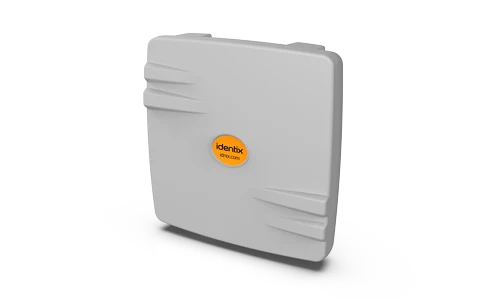
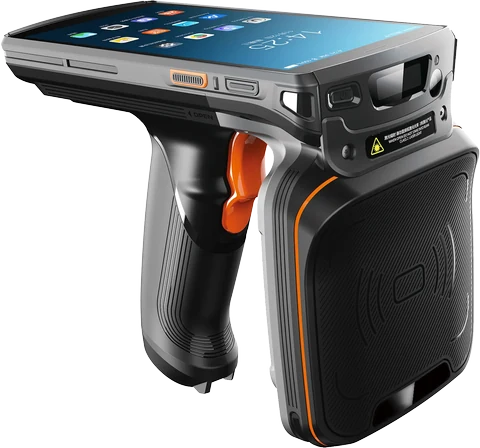
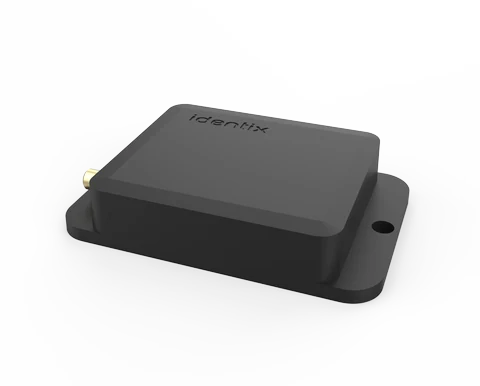
A reader at the packing line and at the exit dock records which lot leaves in each box. EM300H outdoor readers suit open areas, and ID50 handhelds check lots on the spot.
Cold room and dock
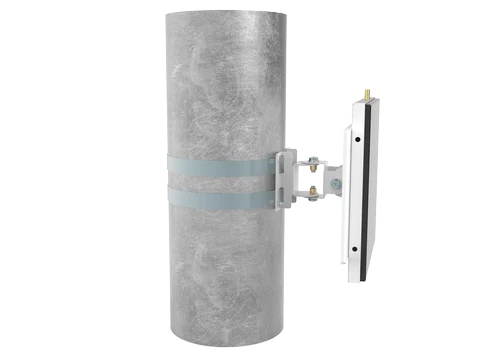
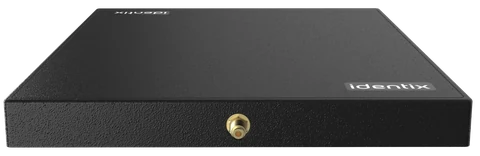
Antennas at the cold-room door and the dock read pallets without stopping the forklift. Choose the antenna for the moisture and the metal in the load.
What you gain
Recall in minutes
You know which lots are affected, where they are and where they went, without calling every partner.
Less waste
Stock that is close to expiry is visible earlier, so it leaves first and less product is thrown away.
Proof for buyers
Each lot carries a record of its path, which supports audits and the requirements of large buyers.
Questions we hear
Do the tags work on produce and in the cold?
Standard RAIN RFID tags work in cold rooms, but water and metal change the read range. Test with your products and packaging before deploying.
Do you sell the tags?
No. Identix supplies readers, antennas, modules and accessories. You choose the tags that suit your products and packaging.
Products for this solution
EM300H
IP67 outdoor RAIN RFID reader with built-in 7 dBi antenna
Details →ID50
Rugged Android RAIN RFID handheld, over 1,100 tags/s
Details →SFFA
Compact far-field antenna, circular polarization, up to 70 cm
Details →Universal Articulated Support
Articulated aluminum mount for any Identix antenna
Details →85C7070
Circular-polarized RAIN RFID panel, 8.5 dBiC, 70° beam
Details →Tell us about your site
Read zone, number of items, environment. We reply with the setup that fits.
Talk to an engineer