
Every instrument, sample and device where it should be
A surgery is about to start and one instrument set is missing. A nurse opens cabinet after cabinet. Down the hall, a lab tube sits on the wrong bench. In a clinic, a lost item is not a number on a report. It is a delay for a patient.
Where time and trust leak
Equipment nobody can find
Pumps, monitors and carts move between floors. Staff walk the corridors to find one, or ask for another. The equipment exists, but nobody knows where.
Sets that must come back complete
A surgical set returns from sterilization and someone counts every piece by eye. It is slow, and tired eyes miss things. A missing piece is found at the worst moment.
Drugs and samples without a trail
Medicine cabinets, dispensing counters and lab benches need to know what was taken and what moved. Handwritten logs and manual scans leave gaps.
How RAIN RFID changes it
- 1
Tag the item, not the shelf
Instrument sets, equipment, vials and boxes carry a standard RAIN RFID tag. You choose it, based on what the item goes through.
- 2
Short range where it must be exact
Near-field antennas read only what is close: up to 1 m for the ANTNF models, 15 cm for the SNFA. The box on the shelf behind stays silent.
- 3
Cabinets and rooms that know their contents
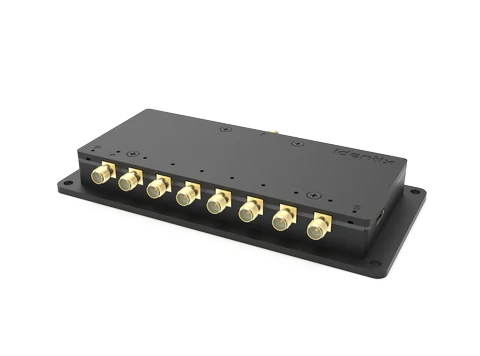
A reader with antennas inside a cabinet or at a door reports what is there. CATENA lets one reader serve many antennas, so a whole storeroom can be covered.
- 4
Records, not memory
Every read goes to your system through standard protocols. Nobody has to write it down, and audits start from data.
Recommended setups
Dispensing counter and medicine cabinet
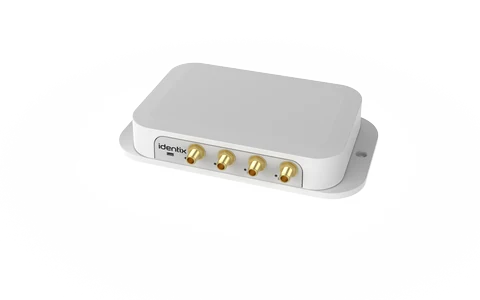
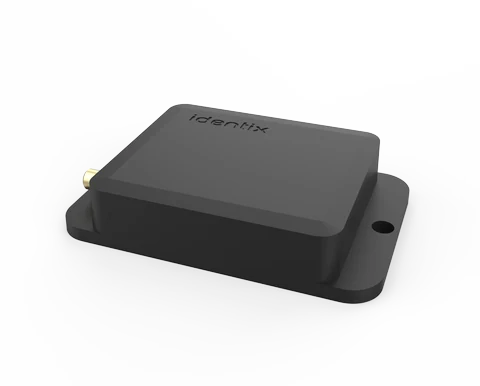
Problem: knowing what was taken. An EM300 reader runs ANTNF0 near-field antennas, which suit small items and tags near liquids or metal. One network cable carries power and data. Add CATENA for more shelves.
Surgical sets at the sterile table
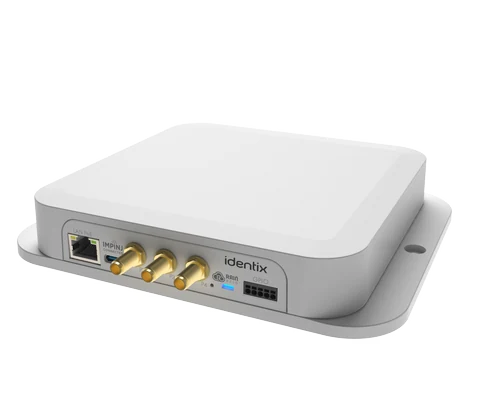
Problem: missing pieces found too late. A DR-max desktop reader takes up to three external antennas, such as ANTNF0 or SFFA. Place the tray, read every tagged instrument, and let your software compare with the set list.
What you gain
Less hunting, more caring
A walk with the handheld tells you what is in each room. Fewer trips down corridors to look for a pump or a cart.
Complete sets before they leave
A missing tagged instrument shows up on the preparation table, not in the operating room.
A trail without paperwork
Cabinet, counter and bench reads reach your system on their own. Audits start from records, not from memory.
Questions we hear
Do you sell the tags?
No. Identix supplies readers, antennas and accessories. You choose standard RAIN RFID tags suited to each item. If an item is washed or sterilized, confirm with your tag supplier that the tag survives it.
Why near-field antennas at counters?
Because they read a short distance. Only what sits on the counter answers, not the stock on the shelf behind. ANTNF models reach up to 1 m. The SNFA reaches up to 15 cm.
Can it read tags on vials, liquids or metal?
The ANTNF0 is made for small items and tags near liquids or metal. Results still depend on the tag and the item, so test with your own samples before rolling out.
Does this replace our hospital system?
No. Readers pass reads to the system you already use, through MQTT, HTTP(s), websockets or sockets. The software side stays with you or your integrator. Identix provides the reading hardware.
Products for this solution
EM300
Compact four-port RAIN RFID reader powered over Ethernet
Details →DR-max
Desktop RAIN RFID reader with Ethernet PoE and +30 dBm
Details →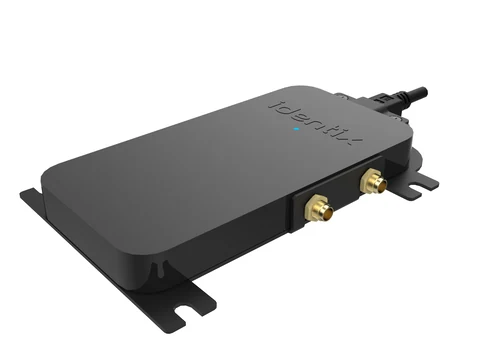
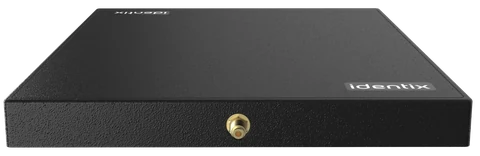
DR-mini
Thin desktop RAIN RFID reader that fits any counter
Details →ANTNF0
Strong, uniform near-field antenna for reads up to 1 m
Details →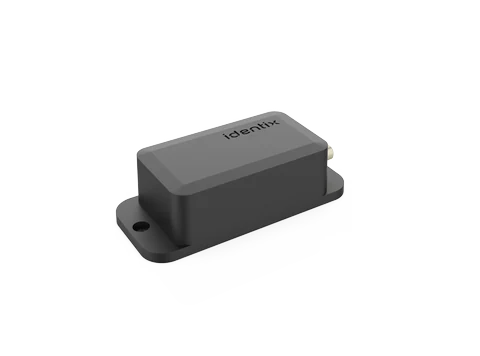
SNFA
Pocket-size near-field antenna for reads up to 15 cm
Details →SFFA
Compact far-field antenna, circular polarization, up to 70 cm
Details →CATENA
8:1 antenna multiplexer that scales a reader to 32 antennas
Details →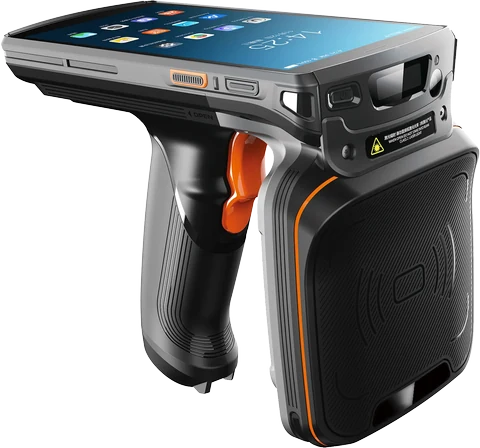
ID50
Rugged Android RAIN RFID handheld, over 1,100 tags/s
Details →Tell us about your site
Read zone, number of items, environment. We reply with the setup that fits.
Talk to an engineer