
Know what is on the shelf before the customer asks
Saturday afternoon. A customer wants the blue one, size M. The system says it is in stock. The shelf says it is not. At the same time, a jacket walks out the door unpaid. Stores lose twice: what they cannot find, and what they never saw leave.
What goes wrong on the shop floor
Stock on paper, not on the shelf
Counting with barcodes means scanning one piece at a time. So stores count rarely, the system drifts from reality, and nobody trusts the number when a customer is waiting.
Losses you discover weeks later
A piece leaves without being paid for. Nobody notices until the next count, and then nobody can say when or how. Alarms may ring, but they never tell you what left.
Slow counters, guesswork in the back
At checkout, every item is scanned by hand while the line grows. In the stockroom, staff open boxes to check what arrived. Both eat time at the moments that matter.
How RAIN RFID changes it
- 1
Every piece answers on its own
Each item carries a standard RAIN RFID tag, of your choice. A reader asks, and all tags in range reply. No line of sight, no scanning one by one.
- 2
Counting becomes walking
An employee walks the aisles with a handheld that reads over 1,100 tags per second. A count stops being an event that closes the store.
- 3
The exit watches itself
A portal at the door reads what crosses it and sends a silent alert to the Identix IRIS platform. No siren, no scene in front of customers.
- 4
The counter reads the basket
A near-field antenna at the counter reads the tagged items placed on it, together. The customer is not waiting while each piece is scanned.
Recommended setups
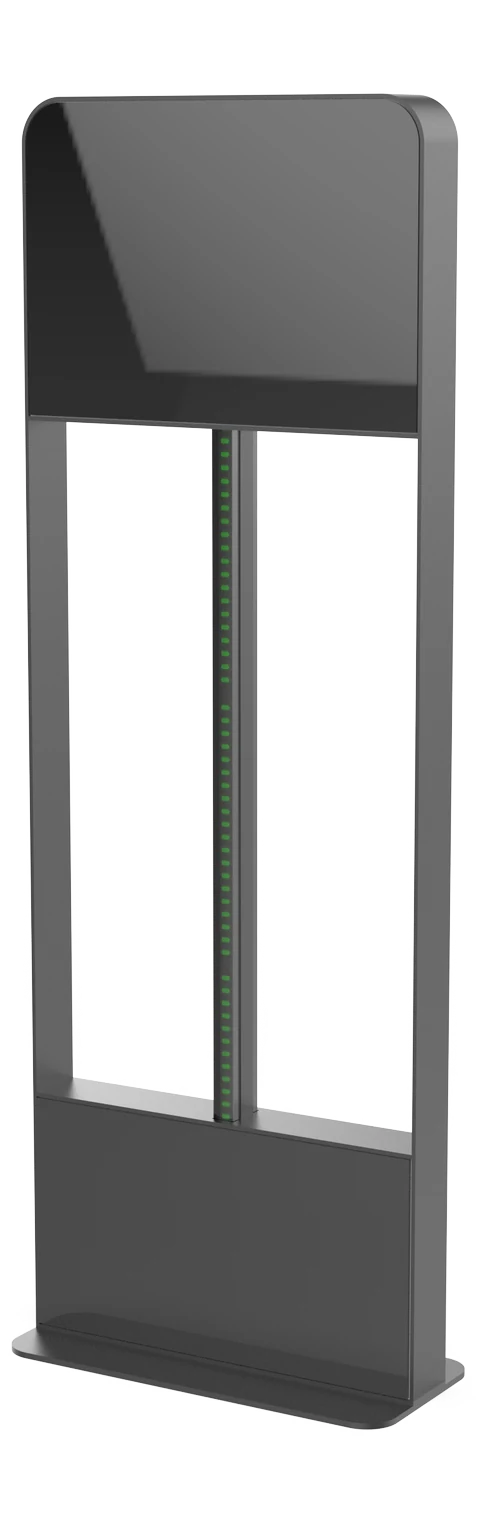

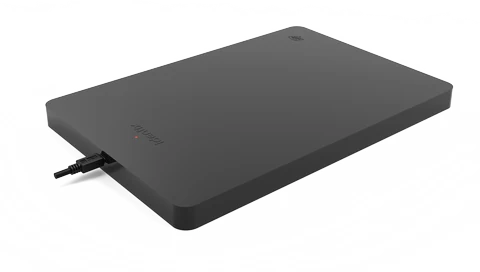
The store exit
Problem: pieces leaving unpaid. ExitView arrives with an EM300 reader and antennas on both sides already built in, powered over PoE. For a smaller store, Portal Slim takes a DR-pad reader, sold separately.
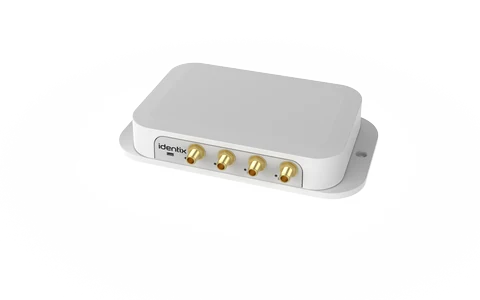
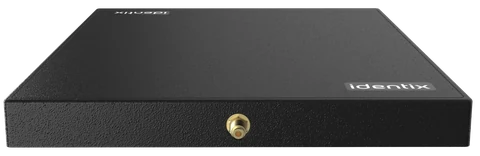
Counter and checkout
Problem: a queue built on one-by-one scanning. An EM300 reader drives up to four ANTNF1 near-field antennas under or on the counter. Its keyboard emulation feeds software built for barcode scanners.
What you gain
Stock you can trust
Counts become quick enough to run often, so the system and the shelf agree more of the time. When a customer asks, the answer is right.
Losses seen on the day
You learn that a piece left today, not at the next count. Alerts are silent, so the team can act calmly.
A calmer queue
Tagged items are read together, not one by one. The cashier scans less and the customer waits less.
Questions we hear
Do you sell the tags?
No. Identix supplies readers, antennas, portals and accessories. Our readers work with standard RAIN RFID tags, so you choose the tags that suit your products and buy them from the supplier you prefer.
Does the exit portal sound an alarm?
ExitView has no siren. It sends events to the Identix IRIS platform as silent alerts. It also speaks MQTT(s), HTTP(s), websockets and sockets, so your own system can receive the same events.
Will it work with the software I already use?
Often, yes. Readers send data over standard protocols. The EM300 and the DR family can also type tag codes like a keyboard, so software built for barcode scanners can receive them without changes.
Can I build my own smart shelf?
Yes. MB and SAM modules measure 32 x 36 x 4 mm and fit inside shelves, cabinets and fridges. SAM modules also run your own code on the module itself, with no external host.
Products for this solution
ExitView
All-in-one RAIN RFID exit portal with built-in reader
Details →Portal Slim
Single-antenna floor portal for small and mid-size stores
Details →DR-pad
Flat desktop RAIN RFID reader with an 8.5 dBiC antenna
Details →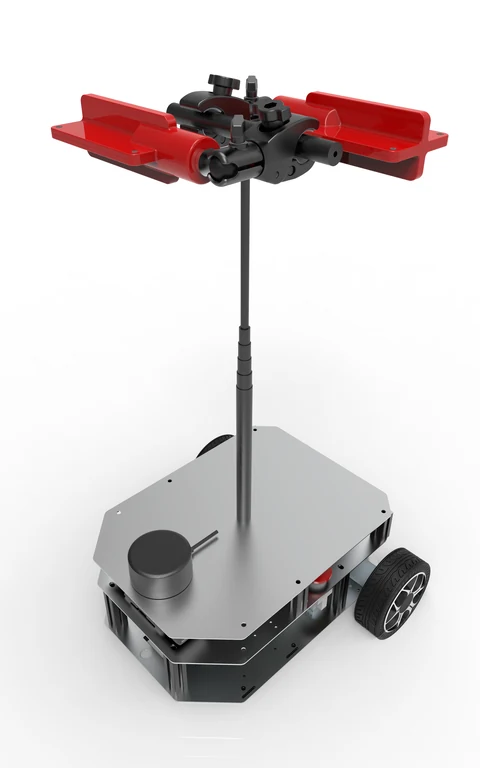
AGV Robot
Store inventory that rolls by itself
Details →EM300
Compact four-port RAIN RFID reader powered over Ethernet
Details →ANTNF1
Lighter near-field antenna for checkouts, up to 1 m
Details →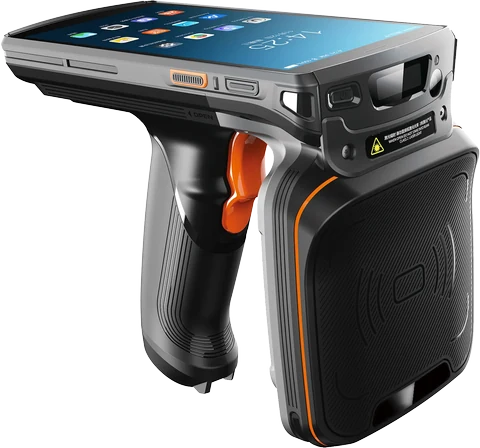
ID50
Rugged Android RAIN RFID handheld, over 1,100 tags/s
Details →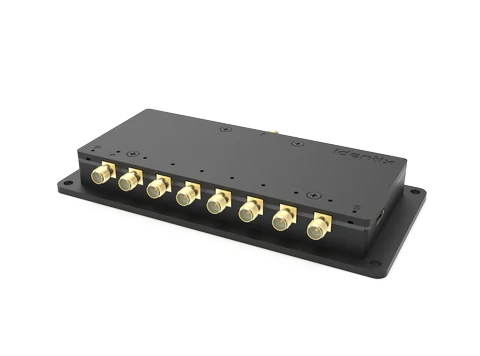
CATENA
8:1 antenna multiplexer that scales a reader to 32 antennas
Details →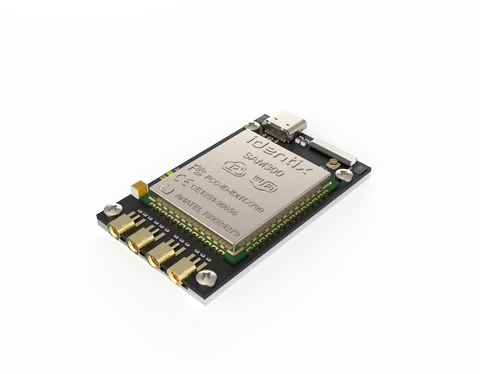
MB series
Multiregional RAIN RFID modules, 32 × 36 × 4 mm
Details →Tell us about your site
Read zone, number of items, environment. We reply with the setup that fits.
Talk to an engineer